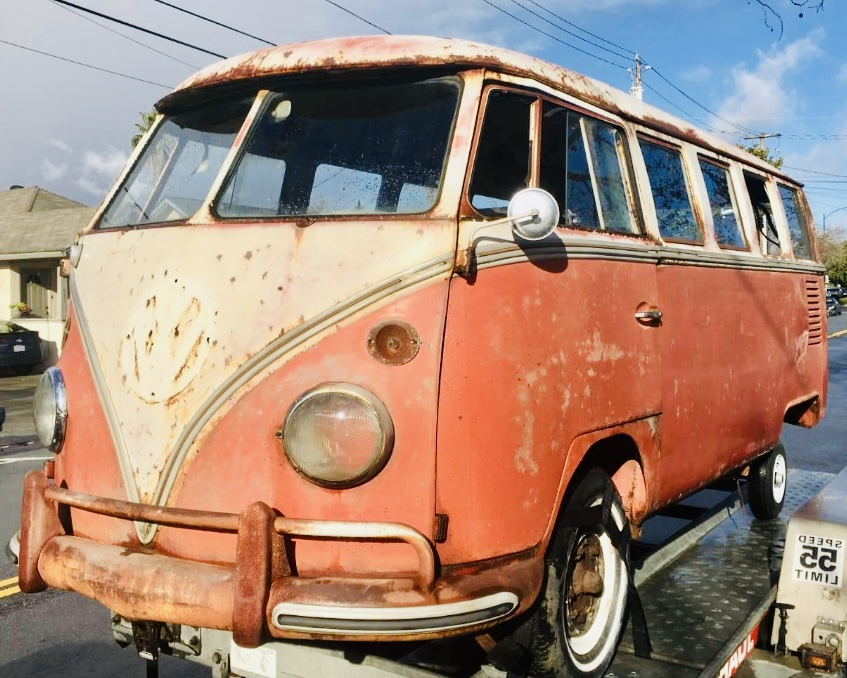
OWNER: JORGE SALAZAR
The 1964 Volkswagen Type 2 (T1) is a
first-generation, rear-engine, air-cooled light commercial vehicle famous as an icon of 1960s counterculture. [
1,
2]
Key Specifications & Features
- Engine & Transmission: Powered by a rear-mounted, air-cooled flat-four boxer engine (traditionally a 1.5-liter producing around 53 hp, or 1.2-liter variants depending on spec) paired with a 4-speed manual transmission. [1, 2, 3]
- Body Styles: Available as a Panel Van, Kombi, Single/Crew-Cab Pickup, Westfalia Camper, and the passenger-oriented Microbus. [1, 2]
- The 1964 “21-Window” Transition: In 1964, Volkswagen updated the Type 2 with a wider rear door, which required removing the two curved rear-corner windows. This change shifted the iconic Deluxe Microbus (Samba) design from a “23-window” to a 21-window layout featuring a pop-out split windshield, side-opening windows, and eight skylight windows. [1]
The vehicle became an icon of the late 1960s thanks to its versatility as a people mover and a camper for families, hippies, and surfers. The Volkswagen Type 2, also known as the Transporter, Kombi, Samba, or Microbus, first appeared on the road in 1950. It quickly grew popular in the United States. By 1964, the Transporter accounted for over 60% of all imported vehicle sales.Like its sibling, the VW Beetle (Type 1), the Transporter has a rear-mounted, air-cooled, four-cylinder boxer engine. This single-port, 1,493 cc engine produces 40 horsepower,
I am the third owner of this vehicle, which originally came from Santa Rosa, California. This Deluxe walk-through underwent a complete restoration to its original specifications and colors, as recorded on its identification plate.